
Outdoor Kitchens & Living Spaces for Coastal Homes
October 7, 2026
On the Jersey Shore and in South Florida, the best room in the house is often outside. A well-designed outdoor kitchen and living space extends the home, makes entertaining easier, and gets used far more than a formal dining room ever will. Building one well takes the same planning as an interior room, plus materials that can handle sun, salt, and storms.
Think in Zones
The most successful outdoor spaces are organized like a great room, with distinct areas that flow into one another:
- Cooking: a grill, prep counter, storage, and ideally a sink.
- Dining: a table close enough to the cooking area to serve easily.
- Lounging: deep seating, often gathered around a fire feature.
- Transitions: covered areas, outdoor showers, and paths that tie the outdoors back to the house.
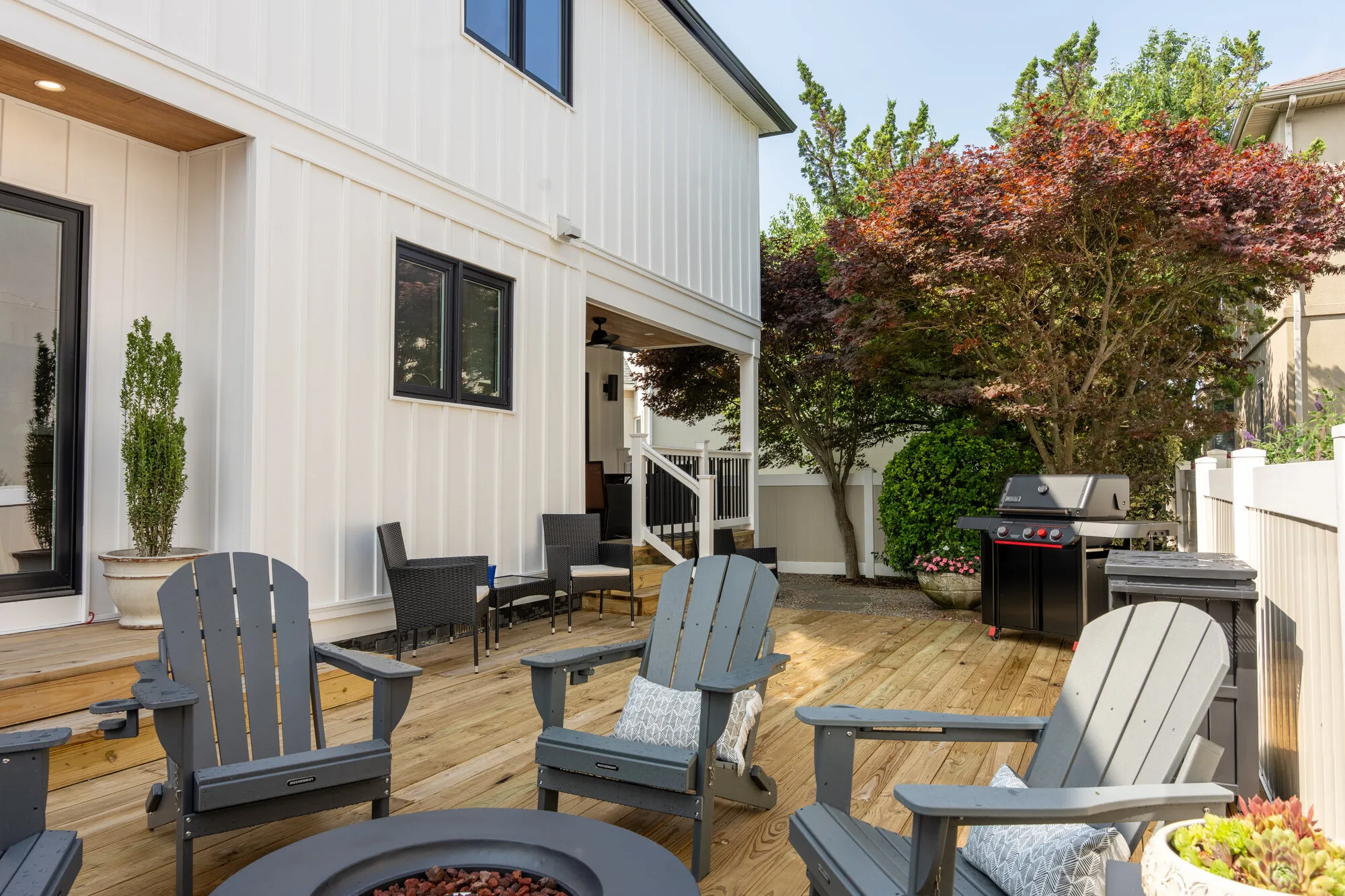
In our Margate Coastal Transformation, a weathered rear deck was rebuilt as a tiered outdoor living space with a fire table, a grill station, and layered coastal plantings. The changes in level define each zone without a single wall.
Planning the Outdoor Kitchen
An outdoor kitchen can be as simple as a built-in grill with counter space or as complete as a second kitchen with a refrigerator, ice maker, side burners, pizza oven, and bar seating. Whatever the scale, a few principles apply:
- Keep the cooking area close enough to the indoor kitchen that carrying food back and forth is easy.
- Give yourself landing space on both sides of the grill.
- Think about where smoke will drift with the prevailing wind, and keep it away from seating and open windows.
- Plan the gas, electrical, and water lines during design. Running utilities is far easier during a build or renovation than after the deck and patio are finished.
Materials That Stand Up to the Coast
Salt air is relentless on metal, and strong sun breaks down many finishes. The right materials are what separate an outdoor kitchen that lasts from one that looks tired after a few seasons:
- Stainless steel: look for 316 marine-grade stainless for appliances, doors, and hardware near the water. Standard 304 stainless can show surface rust in salt air.
- Cabinetry: marine-grade polymer, powder-coated aluminum, or stainless cabinets resist moisture far better than wood.
- Countertops: granite, quartzite, and porcelain handle sun and weather well. Many quartz products are not rated for outdoor use, because UV light can discolor them.
- Decking: composite and PVC decking resist rot and splinters with little maintenance, while tropical hardwoods offer natural beauty with more upkeep.
- Fasteners and connectors: stainless or properly coated hardware throughout the structure, not just where it shows.
Shade and Shelter
Shade is what makes outdoor space usable in July. Covered porches, pergolas, and louvered roof systems give relief from the sun and a place to retreat when an afternoon storm rolls through, a regular part of summer in South Florida. Ceiling fans, outdoor-rated lighting, and a wood or beadboard ceiling make a covered porch feel like a room. In Florida communities like Palm Beach Gardens, a screened lanai keeps the insects out while letting the breeze in.
Fire and Water Features
A fire table or fire pit stretches the outdoor season on the Jersey Shore well into the fall and gives guests a natural place to gather. Gas fire features are easy to use and clean, as long as the gas line and clearances are planned with the rest of the space. Water, whether a pool, a spa, or a simple fountain, adds sound and movement and is especially welcome in the South Florida climate.
Outdoor Showers
An outdoor shower is a shore tradition for good reason. It keeps sand out of the house and is a pleasure after a day at the beach. A well-built enclosure with good drainage, durable materials, and both hot and cold water feels like a luxury rather than an afterthought.
Lighting the Space
Layered outdoor lighting makes a space beautiful and safe after dark: task lighting at the grill, soft light over the dining table, step and path lights where people walk, and accent lighting on plantings and architecture. Use fixtures rated for wet and coastal locations, and put them on dimmers or timers.
Building for Wind and Water
Outdoor structures in coastal areas have to meet the same building codes as the home itself. In hurricane zones, that includes wind-load requirements for roofs, pergolas, and anything attached to the house, and in flood zones, equipment and utilities may need to sit above a set elevation. A builder who knows coastal permitting will account for all of this from the start.
Plan Your Outdoor Living Space
Seaboard Builders plans and builds outdoor living spaces, from decks and covered porches to outdoor kitchens, as part of luxury renovations and custom homes on the Jersey Shore and in South Florida. If you are thinking about how your home could live better outdoors, get in touch and we will talk through the possibilities. For a look at the planning that comes before construction, see what to expect when building a custom home.
Need Help With Your Project?
Call Seaboard Builders today for a free consultation.